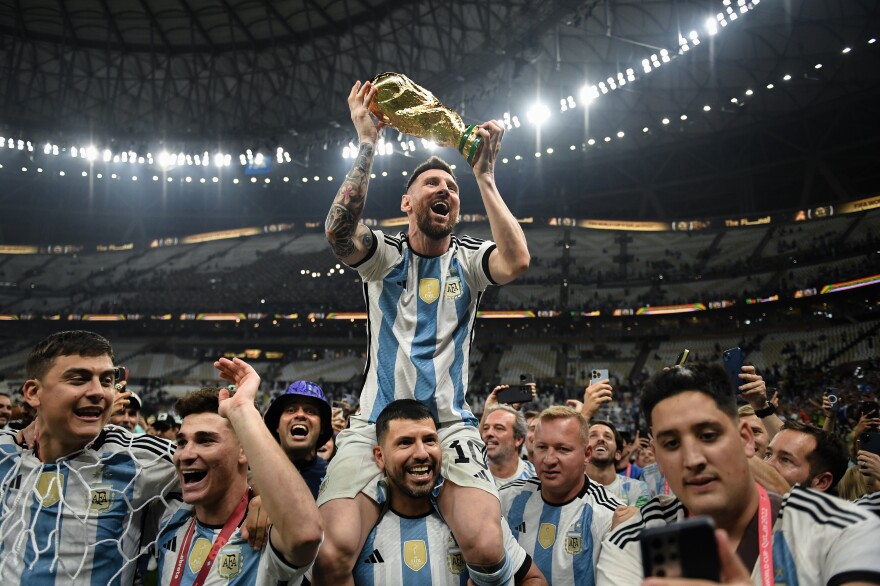
Argentina World Cup Image

What Argentina Winning the World Cup Meant to Me

My family is Argentinian. That is not background information. It is the first thing you need to know to understand why December 18, 2022 was one of the most important days of my life, even though I was watching from a living room in Miami.

Growing up in an Argentinian family outside of Argentina means you carry the country with you in specific ways. In the food, the music, the way people argue at dinner, the way they celebrate. And above everything else, in soccer. Soccer is not a hobby in Argentina. It is a language. It is how people process pride, heartbreak, patience, and belief. It is passed down the same way stories are.

I grew up watching my family talk about Maradona the way some people talk about a relative. The 1986 World Cup was not ancient history. It was a living thing, retold constantly, weighted with meaning. By the time I was old enough to understand, Argentina had not won a World Cup in decades. And Messi, the greatest player most of us had ever seen, had never lifted the trophy. That absence hung over everything.

The 2022 tournament in Qatar was different from the start. Not because of predictions or bracket analysis, but because it felt like something was converging. When Argentina lost their opening match to Saudi Arabia, the silence in our house was heavy. Nobody spoke about it for hours. That is how it works. You do not rationalize. You just sit with it.

Then they started winning. And the further they went, the more it stopped being about soccer. It became about time. About all the years of watching and waiting. About my parents, my grandparents, about people who had been carrying this hope longer than I had been alive.

The final against France was the most intense sporting event I have ever witnessed. I do not think I will ever experience something like it again. When Messi scored, when Mbappe answered, when penalties began, the room was shaking. When the last kick went in and Argentina won, what happened was not celebration in the normal sense. People cried. My family cried. I cried.

It was connection. Pride in something larger than yourself. A reminder that some things take decades of patience and still arrive exactly when they are supposed to. It taught me something about belief: not the motivational poster version, but the real kind, the kind that survives loss and keeps going.

I think about that day often. Not because of the score, but because of what it revealed. That identity is not something you choose. It is something you inherit, carry, and one day feel so deeply it shakes you.
AI / Tools Image

How I Actually Use AI

I am not an AI expert. I want to be clear about that upfront. I do not build models. I do not debate alignment theory. I am a student who builds things, and AI has become one of the most useful tools in how I think, organize, and execute.

The way most people talk about AI falls into two categories: either it is going to replace everything, or it is overblown. I think the more interesting question is simpler. How can you actually use it, right now, to get better at what you are already trying to do?

For me, the answer has been leverage. AI helps me think faster. It helps me organize scattered ideas into structured plans. It helps me draft, iterate, and build at a pace that would not be possible alone. I use it for research, for writing, for financial analysis, for structuring pitch decks, for working through the logic of business decisions before committing to them.

The tool I use the most is Claude. Not because of hype, but because of two things that actually matter in practice: skills and connectors. Skills are specialized capabilities built into the tool. Think of them as areas where the AI has been trained to go deeper, whether that is writing, code, analysis, or creative work. They let you do more specific things at a higher level without needing to over-explain the task every time.

Connectors are different. They let the tool plug into your actual files, systems, and workflows. Instead of copying text into a chat window and hoping for the best, you can give the AI context about what you are actually working on. That shift from generic output to context-aware output is the difference between a toy and a tool.

I use this daily. When I am working on Reddi, I use AI to help draft operational workflows, plan logistics models, and think through edge cases. When I am doing coursework, it helps me move through financial analysis more efficiently. When I am writing, it helps me clarify ideas I already have but have not structured yet.

The mistake I see a lot of people make is treating AI as either a replacement or a gimmick. It is neither. It is leverage. And like any good tool, what matters is not what it can do. It is what you do with it.

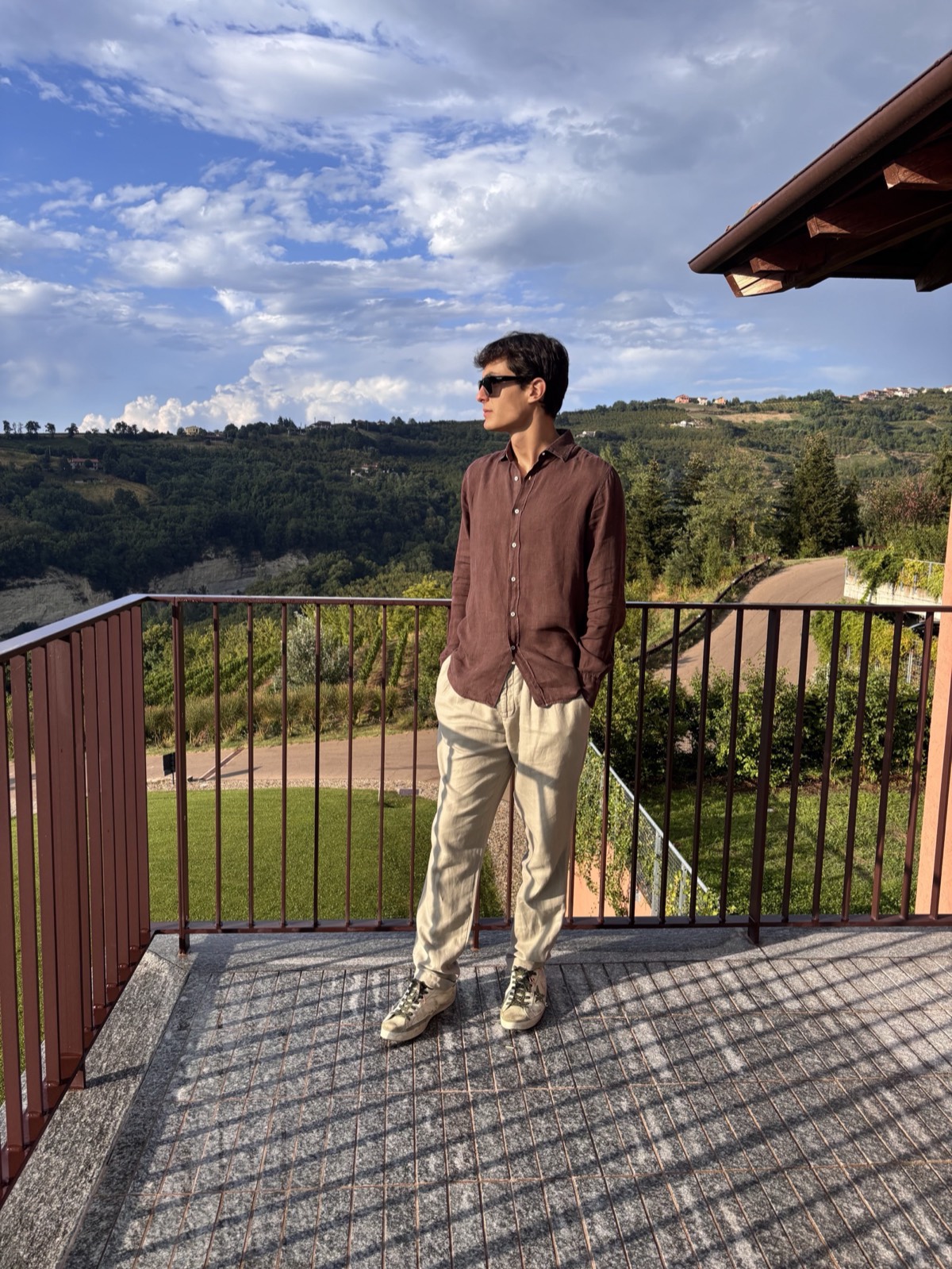
Italy / Europe Image

What Going Back to Italy Taught Me About Where I Come From

My family has deep Italian roots. I knew that growing up, the way you know most things about your family: through food, through stories at dinner, through the way certain words sounded familiar even before you understood them. But knowing something and feeling it are different.

The first time I went to Italy, it hit differently. Walking through streets that looked the way my grandparents described them. Sitting in restaurants where the food tasted like what I had grown up eating at home but somehow more original, closer to the source. Hearing the language spoken casually, everywhere, by people who did not think of it as heritage. It was just life.

That was the shift. In Miami, being Italian-Argentinian is a story you tell. In Italy, it is not a story. It is Tuesday. And something about that grounded me. It made the identity feel less like something I was carrying and more like something I was standing on.

I have traveled to over 15 countries now, and I keep coming back to Europe. Not because of any single destination, but because of what the experience does. Every country I visit changes how I understand the one I came from. Watching how people in different places approach work, family, food, time, and ambition has broadened my taste and sharpened my perspective on what matters.

In Scandinavia, I noticed how design and simplicity were embedded in daily life, not as luxury but as baseline expectation. In Spain, I saw how people prioritized relationships and conversation in a way that felt countercultural to the speed I was used to. In Italy, I saw craftsmanship treated with a kind of reverence that is hard to find in places optimized for efficiency.

Travel has taught me that innovation does not come from one place. It comes from the friction between places. The best ideas I have had were shaped by something I noticed abroad that did not exist at home, or something from home that I only understood after seeing how other people lived.

Going back to Italy is not just a trip. It is a recalibration. A reminder that the things I value, the way I approach building, the attention I pay to quality and to people, did not come from nowhere. They came from somewhere specific. And returning to that place, even briefly, makes everything else feel clearer.